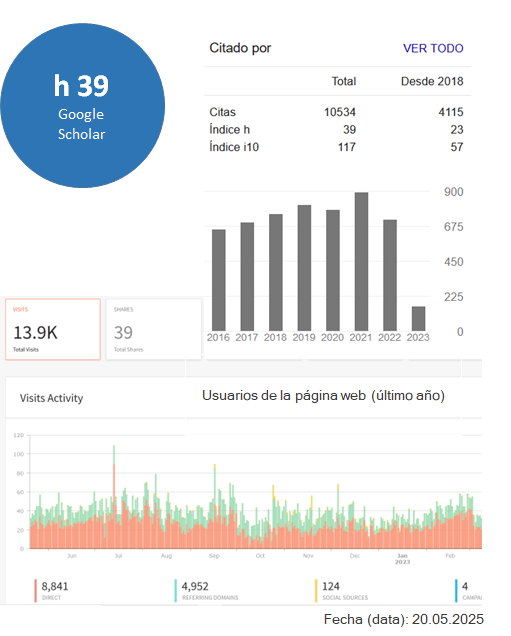
Entre biosociabilidad y biolegitimidad: sociabilidad, tratamiento y activismo en una asociación de personas que viven con VIH.
DOI:
https://doi.org/10.48160/18517072re42.596Palavras-chave:
VIH-SIDA, tratamiento antirretroviral, biosociabilidad, biolegitimidadResumo
En este trabajo, analizamos el activismo de personas afectadas por el vih-sida en el Área Metropolitana de Buenos Aires, enfocando en las subjetividades creadas en las experiencias de padecimiento y tratamiento. Se argumenta, en primer lugar, que los “grupos de pares”[1] de personas con vih son espacios de sociabilidad donde se generan categorías de identificación y diferenciación. Allí emergen formas de control de las prácticas individuales e imperativos de adhesión al tratamiento, apropiándose de categorías médicas. En segundo lugar, se sostiene que la disrupción corporal en la experiencia de padecimiento y tratamiento genera una permanente observación de sí modelada por y expresada a través de definiciones y tecnologías biomédicas, al tiempo que pone en cuestión las premisas de la “adherencia” a las terapias antirretrovirales. Finalmente, se afirma que el sufrimiento corporal legitima demandas novedosas que pueden ser entendidas en términos de biosociabilidad y biolegitimidad.
Referências
Barber, N. (2015), “Experiencias de enfermedad y procesos de constitución de subjetividades”, tesis doctoral de la Facultad de Filosofía y Letras, Universidad de Buenos Aires, mimeo.
Barbot, J. (2005), “How to build an ‘active’ patient. The work of aids associations in France”, Social Science & Medicine, vol. 62, N° 3, pp. 538-551.
Biehl, J. (2007), Will to Live: aids Therapies and the Politics of Survival, Princeton, Princeton University Press.
Biehl, J. (2008), “Drugs for All: The Future of Global aids Treatment”, Medical Anthropology, vol. 27, N° 2, pp. 1-7.
Biehl, J. (2011), “Antropologia no campo da saúde global”, Horizontes Antropológicos, vol. 17, N° 35, pp. 257-296.
Biehl, J., B. Good y A. Kleinman (2007), “Rethinking subjectivity”, en Biehl, J., B. Good y A. Kleinman (eds.), Subjectivity Ethnographic Investigations, Berkeley y Los Ángeles, University of California Press, pp. 1-33.
Foucault, M. (1991), “La gubernamentalidad”, en AA. VV., Espacios de poder, Madrid, La Piqueta, pp. 35-56.
Foucault, M. (2006), Seguridad, territorio, población, Buenos Aires, Fondo de Cultura Económica.
Gobierno de la Ciudad de Buenos Aires (s/f ), “Vivir con vih. ¿Y si el resultado fuera positivo?”. Disponible en: <http://www.buenosaires.gob.ar/salud/vih-sida/vivir>.
Gould, D. (2001), “Rock the Boat, Don’t Rock the Boat, Baby: Ambivalence and the emergence of Militant aids Activism”, en Goodwin, J., J. Jasper y F. Polletta (eds.), Passionate Politics. Emotions and Social Movements, Chicago, The University of Chicago Press, pp. 231-256.
Gregoric, J. J. (2013), “Sobrevivir con el vih-sida. Moralidad, control y cuidado de sí”, ponencia presentada en las VII Jornadas de Investigación en Antropología Social “Santiago Wallace”, Sección de Antropología Social, Instituto de Ciencias Antropológicas, Universidad de Buenos Aires, 27-29 de noviembre.
Margulies, S. (2014), La atención médica del vih-sida. Un estudio de antropología de la medicina, Buenos Aires, Editorial de la Facultad de Filosofía y Letras de la Universidad de Buenos Aires.
Margulies, S., N. Barber y L. Recoder (2006), “vih-sida y ‘adherencia’ al tratamiento, enfoques y perspectivas”, Antípoda. Revista de Antropología y Arqueología, N° 3, pp. 281-300.
Nguyen, V.-K. (2005), “Antiretroviral Globalism, Biopolitics, and Therapeutic Citizenship”, en Ong, A. y S. Collier (eds.), Global Assemblages: Technology, Politics, and Ethics as Anthropological Problems, Londres, Blackwell, pp. 124-144.
Nguyen, V.-K. (2010), The Republic of Therapy: Triage and Sovereignty in West Africa’s Time of aids, Londres, Duke University Press.
Ong, A. y S. Collier (eds.) (2005), Global Assemblages: Technology, Politics, and Ethics as Anthropological Problems, Londres, Blackwell.
Petryna, A. (2004), “Biological Citizenship: The Science and Politics of Chernobyl-Exposed Populations”, Osiris, vol. 19, N° 2, pp. 250-265.
Rabinow, P. (1996), Essays on the Anthropology of Reason, Princeton, Princeton University Press.
Rabinow, P. y Rose, N. (2006), “Biopower Today”, BioSocieties, vol. 1, N° 2, pp. 195-217.
Recoder, M. L. (2011), Vivir con vih-sida. Notas etnográficas sobre el mundo de la enfermedad y sus cuidados, Buenos Aires, Biblos.
Reynolds Whyte, S. (2009), “Health Identities and Subjectivities. The Ethnographic Challenge”, Medical Anthropology Quarterly, vol. 23, N° 1, pp. 6-15.
Robins, S. (2006), “From ‘Rights’ to ‘Ritual’: aids Activism in South Africa”, American Anthropologist, vol. 108, N° 2, pp. 312-323.
Rose, N. y C. Novas (2005), “Biological Citizenship”, en Ong, A. y S. Collier (eds.), Global Assemblages: Technology, Politics, and Ethics as Anthropological Problems, Londres, Blackwell, pp. 16-67.
Valle, C. G. (2013), “Doença, ativismo biossocial e cidadania terapêutica: a emergência da mobilização de pessoas com htlv no Brasil”, Vivência. Revista de Antropologia, vol. 1, N° 41, pp. 41-76.
Downloads
Publicado
Como Citar
Edição
Seção
Licença
Copyright (c) 2016 Redes. Revista de Estudios Sociales de la Ciencia y la TecnologíaOs documentos publicados aqui são regidos pelos critérios de licenciamento Creative Commons Argentina.Atribución - No Comercial - Sin Obra Derivada 2.5 https://creativecommons.org/licenses/by-nc-nd/2.5/ar/