
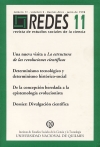
Una nueva visita a La estructura de las revoluciones científicas: la transición de la ciencia tradicional a la ciencia moderna en la India
DOI:
https://doi.org/10.48160/18517072re11.843Palavras-chave:
kuhn, india, cienciaResumo
Este trabajo discute la noción de inconmensurabilidad de Thomas Kuhn, objeto de discusiones críticas que se extienden en el presente. Tal es el caso de un estudio hecho por Mario Biagioli, donde se procura demostrar que la inconmensurabilidad es menos un desajuste estructural entre los patrones lingüísticos de los protagonistas, resultante en una imposibilidad de comunicarse (excepto si son bilingües), que algo similar a la evolución darwiniana de las especies que se construye en el
proceso de cambio teórico. La inconmensurabilidad es entonces una imposibilidad de “procrear” intelectualmente. El autor sostiene que este debate puede tener sentido únicamente en el contexto limitado del cambio de paradigma dentro de una cultura dada. Para ello, el trabajo intenta someter a prueba esas diferentes concepciones de la inconmensurabilidad, a la luz de la apropiación e institucionalización de la ciencia “occidental” en la India en los siglos XIX y XX. Se llega a la conclusión de que ni la tesis de Kuhn ni la de Biagioli funcionan en el caso hindú, ya que no parece haber inconmensurabilidad entre los representantes de los sucesivos paradigmas.
Referências
-
Downloads
Publicado
Como Citar
Edição
Seção
Licença
Copyright (c) 1998 Redes. Revista de Estudios Sociales de la Ciencia y la TecnologíaOs documentos publicados aqui são regidos pelos critérios de licenciamento Creative Commons Argentina.Atribución - No Comercial - Sin Obra Derivada 2.5 https://creativecommons.org/licenses/by-nc-nd/2.5/ar/